
Comparing LEGO® bricks, plates, and DUPLO® bricks
When it comes to understanding how our designers can create such elaborate and detailed sets, it all comes back to the humble LEGO® brick. One of the things that makes our bricks unique is that our factory teams work really hard to make sure they’re super accurate… every single brick we make must fit together exactly to make sure our fans can enjoy the best building experience.
If you’d like to know more, here’s some more info on how the most common bricks stack up.
Flat plate
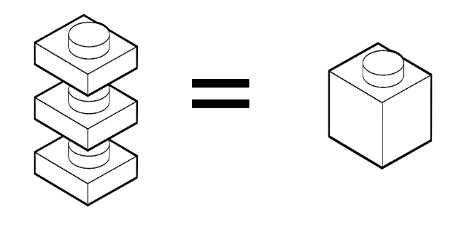
Meet the ‘flat plate’. This is one of our smallest bricks… but it’s super handy for detailed models. And, if you stack three of these on top of each other, they’ll be exactly the same size as our regular 1x1 brick. Top tip: If you need to separate these bricks again later, it’s best to use a brick separator as they have a lot of clutch power.
‘Two by one’ and ‘two by four’
Next, let’s introduce you to the 2x1 and the 2x4. You’ll find these in pretty much every LEGO Set (except LEGO Technic™ models which use a different building system). The 2x1 brick is one of our oldest elements around… we started making it in 1952! If you turn the 2x1 brick upside down, you’ll see it’s designed with a solid tube that gives it extra clutch power.
‘Two by four’
As you might have guessed by the name, the 2x4 brick is four times as long as the 2x1.
Over time, the black 2x4 brick has made an appearance in over 540 LEGO Sets! It features three hollow tubes on the inside so it sticks really well to other bricks.
DUPLO® bricks
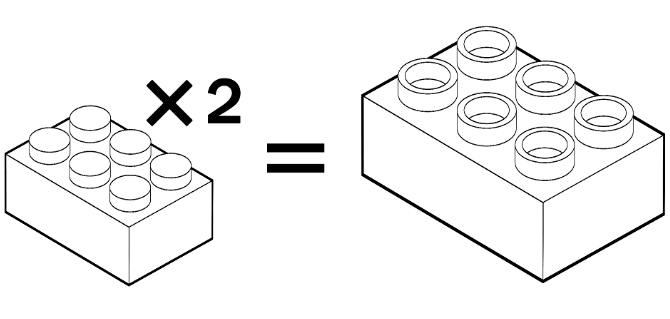
Our DUPLO bricks are scaled up to be twice the size of our regular LEGO bricks. Our research has shown that the larger size makes them perfect for younger LEGO builders. Did you know you can mix DUPLO and LEGO bricks together? Take a look at this handy help topic to see how you can combine them.